Retaining Walls in Birmingham
Concrete Retaining Walls in Birmingham We Build Right
We Serve Birmingham, AL and Surrounding Areas for Retaining Wall Services
We provide concrete retaining wall services throughout Birmingham, AL and the surrounding communities. Our crew works in neighborhoods across Jefferson and Shelby counties, including Homewood, Vestavia Hills, Mountain Brook, Hoover, Trussville, Irondale, Cahaba Heights, and Pelham. If you are along Highway 280, near Shades Crest Road, or anywhere off Interstate 459, we can get to your property and take a look. We typically respond to new project inquiries within one business day and can schedule a site visit quickly depending on our current workload.
Common Problems That Lead Homeowners to Need a Retaining Wall
Most homeowners reach out to us because something on their property is shifting, washing out, or slowly getting worse. You might notice soil sliding down a slope after heavy rain, a yard that pools water in all the wrong places, or a hillside that keeps eating into your usable outdoor space. Some people come to us after a flower bed collapses, a patio starts to settle, or erosion undercuts a driveway or walkway. These are not small cosmetic issues. Left alone, moving soil puts real pressure on nearby structures, damages landscaping, and can create safety hazards over time. Retaining wall construction done correctly stops that cycle and gives your property a stable foundation to build on.
What We Know About Birmingham Terrain, Soil, and Weather That Affects Retaining Walls
Birmingham sits in the Alabama Piedmont, and the terrain here is not flat or simple. Areas around Red Mountain, Ruffner Mountain, and Shades Mountain have steep grades and significant elevation changes that put real stress on slopes and soil. The red clay soil found across much of Jefferson County is dense, slow to drain, and expands when it gets wet. That expansion creates hydrostatic pressure behind retaining walls, which is one of the main reasons walls crack, lean, or fail when they are not built with proper retaining wall drainage in mind. We factor all of that into how we design and build every wall. If you want to understand the retaining wall basics Birmingham AL homeowners need to know before starting a project, soil behavior and drainage are the first things we talk about on every site visit. Birmingham also sees heavy seasonal rain, and areas near Village Creek or Shades Creek can experience serious water movement that makes drainage planning critical. Our team has over 20 years of combined experience pouring concrete and more than 10 years working specifically in the Birmingham area, so we know this ground.
Frequently Asked Questions From Birmingham Homeowners About Retaining Walls
Do I need a permit for a retaining wall in Birmingham? In many cases, yes. The Birmingham Building Permits Office and the Jefferson County Department of Planning and Zoning both have requirements depending on wall height and location. We help you understand what applies to your project before work begins.
How long does a retaining wall last? A properly built wall using quality retaining wall materials like segmental retaining wall block, geogrid reinforcement, and compacted gravel backfill can last decades. Shortcuts in drainage or backfill are what shorten that lifespan.
What types of walls do you build? We build residential retaining walls, gravity retaining walls, reinforced retaining walls, landscape retaining walls, garden retaining walls, and modular retaining walls depending on what your site and budget call for.
How do I know what kind of wall I need? That depends on your slope, soil type, load above the wall, and how much space you have to work with. We walk through all of that during your site visit. Understanding the difference between wall types is a good place to start, and that leads right into what a concrete retaining wall actually is and how it works.
What Is a Concrete Retaining Wall
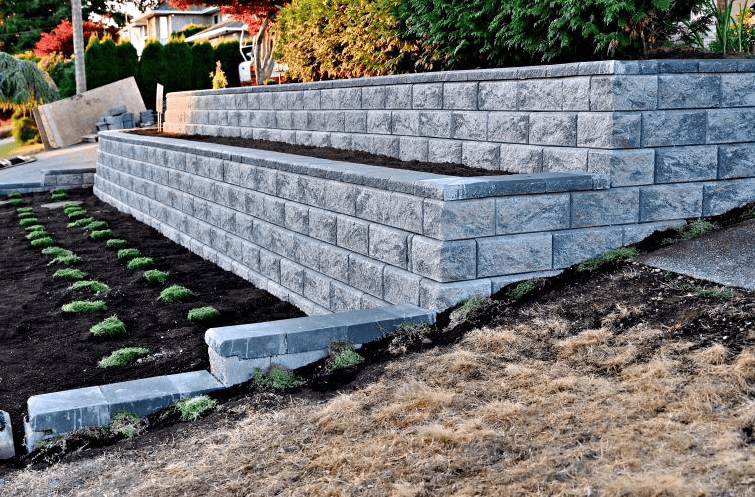
A concrete retaining wall is a structure built to hold back soil and prevent it from sliding or shifting. If your yard has a slope, a raised planting area, or uneven ground, a retaining wall keeps that soil in place so the land around it stays stable. We have spent over 20 years pouring concrete and more than 10 years working throughout Birmingham, so we understand how important it is to get these structures built correctly from the start.
The Basic Purpose of a Retaining Wall
The main job of a retaining wall is to manage hydrostatic pressure and the natural weight of soil pushing against a slope. Without proper support, that pressure causes erosion, foundation damage, and unsafe conditions on your property. A well-built wall holds the ground in place, controls water runoff, and gives you flat, usable space where there was once a problem slope. Good retaining wall drainage is just as important as the wall itself. We use materials like compacted gravel backfill and 4-inch perforated drain pipe to move water away from the wall and reduce pressure buildup behind it.
How Concrete Retaining Walls Differ From Other Materials
You have several options when it comes to retaining wall materials, including timber, natural stone, and concrete. Concrete stands apart because of its strength, lifespan, and flexibility in retaining wall design. We work with cast-in-place concrete, segmental retaining wall block, and precast concrete panels depending on what your project needs. Brands like Versa-Lok, Allan Block, and Redi-Rock give us reliable options for both modular retaining walls and reinforced retaining walls that meet standards like ASTM C1372 and ACI 318. Timber breaks down over time, and natural stone can be harder to engineer for taller walls. Concrete gives you a more consistent and durable result.
Birmingham's red clay soil and heavy seasonal rain put real stress on any retaining structure. That expansive soil expands when wet and contracts when dry, which can crack or shift walls that were not built for those conditions. We factor in local soil behavior, bedrock depth, and slope ratios during every retaining wall construction project we take on here in the Birmingham area.
Where Retaining Walls Are Commonly Used on Residential and Commercial Properties
Retaining walls show up in a wide range of settings. On residential properties, we build residential retaining walls along driveways, behind homes on hillside lots, and around patios or garden areas. Neighborhoods like Vestavia Hills, Mountain Brook, and Homewood sit on hilly terrain where landscape retaining walls and garden retaining walls are a common need. Subdivisions like Ross Bridge and Greystone also feature properties where grading and slope control are part of the original build.
On commercial properties, retaining walls support parking lots, loading areas, and landscaped slopes along busy corridors like Highway 280 and Cahaba Valley Road. Whether the goal is structural support or improving retaining wall aesthetics with decorative retaining walls, the design and engineering behind the wall matters just as much as how it looks.
Once a wall is in place, it quietly does its job season after season. But not every property owner knows when they actually need one. There are some clear signs that a retaining wall may be overdue on your property.
Signs You May Need a Retaining Wall
If you own property in Birmingham, you already know the land here rarely sits flat. From the slopes around Red Mountain to the rolling yards in Vestavia Hills and Hoover, uneven terrain is just part of life in this area. That terrain, combined with Alabama's heavy rainfall and red clay soil, can put real stress on your property over time. Knowing the warning signs early can save you from bigger, more costly problems down the road.
Soil Erosion and Washout on Sloped Areas
If you notice bare patches, exposed roots, or dirt washing down a slope after rain, that is erosion at work. Birmingham gets significant rainfall throughout the year, and cohesive soil and expansive clay move more than most people expect. Without proper support, a slope can slowly lose ground season after season. Retaining wall construction is one of the most reliable ways to stop that process before it reaches your foundation, landscaping, or driveway.
Uneven or Shifting Ground Near Your Home or Driveway
Cracking pavement, sinking walkways, or ground that feels soft and unstable are signs the soil underneath is moving. Neighborhoods like Mountain Brook and Cahaba Heights sit on terrain where the underlying saprolite and weathered shale can shift with moisture changes. A properly built residential retaining wall using geogrid reinforcement and compacted structural fill can stabilize that movement before it causes damage to nearby structures.
Water Pooling or Runoff Problems in Your Yard
Standing water after rain is not just a nuisance. It puts hydrostatic pressure against foundations and saturates the soil around your home. Poor retaining wall drainage is one of the leading causes of wall failure, and it is often a sign that an existing structure was not built with a 4-inch perforated drain pipe or adequate drainage aggregate behind it. If water is collecting in the wrong places, a new wall with the right drainage design can redirect it safely away from your property.
Crumbling or Failing Existing Walls That Need Replacement
Leaning, cracking, or bowing walls are not cosmetic issues. They are structural warnings. Older walls built without proper retaining wall materials like geotextile fabric, rebar grade 60, or a gravel backfill layer often fail within years of installation. We see this regularly on properties throughout Homewood, Irondale, and Trussville. When a wall starts to show those signs, replacement is usually the smarter call over patching. Once you know a new wall is the right move, the next step is understanding which type of wall fits your property best.
A few years back, we took on a retaining wall project over in Hoover that turned into one of the most challenging jobs we have faced in our time working in the Birmingham area. The homeowner needed a large retaining wall built along a sloped backyard to stop soil erosion and create a flat usable space for their family.
Everything seemed straightforward when we started planning. But once we began digging, we ran into something we did not expect. The soil composition was a mix of red clay and loose rock, which is pretty common here in the Birmingham region, but this particular site had layers that shifted in ways that made it hard to create a stable base. Red clay expands when it gets wet and shrinks when it dries out, and with Alabama's unpredictable rainfall, that creates serious pressure on a retaining wall over time.
We had to stop, reassess, and redesign our drainage plan before pouring a single yard of concrete. We brought in extra gravel backfill and installed a French drain system behind the wall to redirect water away from the structure. We also had to go deeper on our footings than originally planned to make sure the wall would hold against the soil pressure pushing against it.
The project took longer than we told the homeowner it would, and we had an honest conversation with them about why. With over 20 years of combined experience pouring concrete, we knew cutting corners was not an option. That wall needed to last, and today it is still standing strong without any signs of shifting or cracking. When you work with us, that is the level of care you can count on.
Types of Retaining Walls We Build
We have spent over 20 years pouring and placing concrete, and more than 10 of those years working right here in Birmingham. In that time, we have built retaining walls across a wide range of properties, from hillside lots in Vestavia Hills to sloped backyards near Shades Mountain. Birmingham's red clay soil and heavy seasonal rain create real demands on any retaining wall, so knowing which type to build and how to build it correctly matters a lot.
Poured Concrete Retaining Walls
Cast-in-place concrete walls are one of the strongest options available. We form them on site, set Rebar Grade 60 for reinforcement, and pour using a 3,000 PSI or 4,000 PSI concrete mix depending on the load and height requirements. These are considered reinforced retaining walls, and they perform well in situations where soil pressure is high or where a wall needs to hold back a significant amount of grade. Because the wall is monolithic, there are fewer joints and fewer weak points. For taller walls or walls holding back expansive soil common to the Birmingham area, this is often the most reliable solution.
Concrete Block Retaining Walls
Concrete block walls use Concrete Masonry Units stacked and mortared in a way that provides both strength and a clean finished look. We often reinforce these with rebar and grout fill to meet the demands of residential retaining walls on steeper lots. These walls work well in tighter spaces where equipment access is limited, which comes up often in older neighborhoods like Forest Park or Avondale where lots can be narrow and grades are steep. Block walls meet ASTM C90 standards and, when built with proper retaining wall drainage behind them, they hold up well through Alabama's wet seasons.
Segmental Retaining Walls
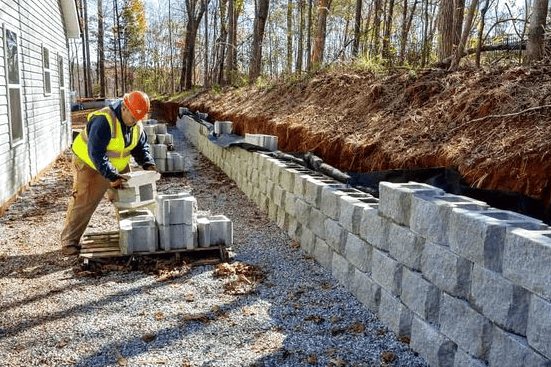
Segmental retaining walls use dry-stacked interlocking units rather than mortar. Brands like Versa-Lok, Allan Block, and Belgard are commonly used products we work with, and they are built to meet ASTM C1372 standards. For taller walls, we integrate Tensar or Mirafi geogrid reinforcement into the backfill at set intervals to create what are called modular retaining walls with geogrid-reinforced mass. We use compacted gravel backfill and a 4-inch perforated drain pipe to manage hydrostatic pressure, which is a real concern given how much rain Birmingham receives each year. These walls are popular across subdivisions like Greystone, Inverness, and Ross Bridge where the terrain requires practical, durable solutions.
Decorative Concrete Retaining Walls for Landscaping
Not every retaining wall is purely functional. We build decorative retaining walls and garden retaining walls that do the job of holding soil while also adding to the look of a yard or outdoor space. Retaining wall aesthetics matter more in visible areas, like along a front yard, beside a driveway, or framing a patio. We can work with limestone cap block, textured block faces, or even stamped and colored cast-in-place concrete to create landscape retaining walls that fit the style of your property. Retaining wall design at this level takes some planning, and we take the time to make sure the materials and layout work with what you already have. Once we settle on the right type of wall for your property and your goals, we follow a consistent process to make sure it is built to last, and that process starts with the ground beneath your feet.

How We Build a Retaining Wall
Every retaining wall we build in Birmingham starts with a clear process. Whether we are working on residential retaining walls in Vestavia Hills or landscape retaining walls along a sloped backyard in Hoover, the steps stay the same. Here is how we approach each project from the ground up.
Site Evaluation and Measuring the Slope or Grade
Before anything is dug or placed, we walk the site and take careful measurements. We use a grade laser and laser level to read the slope accurately. Birmingham's terrain, especially around areas like Shades Mountain or Red Mountain, can vary a lot from one end of a property to the other. We also look at the soil. Red clay soil and expansive soil are common here, and both affect how we plan the retaining wall design. Soil bearing capacity tells us how much load the ground can safely handle before we ever pick up a shovel.
Planning for Drainage Behind the Wall
Retaining wall drainage is one of the most important parts of the job. Poor drainage is the main reason walls crack, lean, or fail over time. Before we finalize the retaining wall construction plan, we map out where water moves across the site, especially during the heavy rains that are common in Jefferson County. We plan for a 4-inch perforated drain pipe and a 6-inch drainage aggregate layer behind the wall to manage hydrostatic pressure before it becomes a problem.
Excavation and Footing Preparation
We use an excavator and skid steer loader to clear the area and cut into the slope at the right depth. A 12-inch minimum embedment depth is standard for the base course, and we make sure the footing sits on firm, undisturbed ground. If we run into weathered shale or saprolite, which is not uncommon in Birmingham's Piedmont geology, we adjust accordingly. The base is then leveled and compacted using a plate compactor and verified with a soil compaction tester to reach 98% Proctor compaction.
Pouring or Placing the Concrete
Depending on the retaining wall materials chosen for your project, we either pour cast-in-place concrete or set segmental retaining wall block such as Versa-Lok or Allan Block. For poured walls, we typically use a 4,000 PSI concrete mix along with Rebar Grade 60 for reinforced retaining walls that need to handle serious lateral soil pressure. Modular retaining walls using block systems get placed with a 1-inch setback per course to give the wall its batter and keep it stable over time.
Backfill, Compaction, and Finishing
Once the wall is set, we backfill in lifts using compacted structural fill, working in 12-inch lift compaction layers to avoid putting too much pressure on the wall at once. Geogrid reinforcement from brands like Tensar or Mirafi is added when the wall height or surcharge load calls for it. Geotextile fabric separates the drainage aggregate from surrounding soil to keep the system working long-term. For projects where retaining wall aesthetics matter, we can finish the wall with a limestone cap block or other decorative options that tie into the overall look of your yard or landscaping. Whether it is a simple garden retaining wall or a more complex gravity retaining wall holding back a steep hillside, we take the same care at every step.
With the structure in place and the backfill compacted, the next thing to understand is how drainage and structural design work together to keep your wall standing for years to come.
Drainage and Structural Considerations
Why Drainage Is the Most Important Part of a Retaining Wall
When we talk to homeowners about retaining wall construction in Birmingham, drainage comes up before anything else. Alabama gets a lot of rain, and the red clay soil common across the area does not absorb water well. That water has to go somewhere. If it builds up behind your wall, it adds serious weight and pressure that most walls are not designed to handle on their own. We always install a 6-inch drainage aggregate layer and a 4-inch perforated drain pipe behind the wall to move water away before it becomes a problem. Getting this step right is the difference between a wall that lasts decades and one that starts leaning within a few years.
How Hydrostatic Pressure Can Damage Walls Without Proper Drainage
Hydrostatic pressure is what happens when water gets trapped behind a wall and has nowhere to go. Over time, that pressure pushes against the wall from the inside. On residential retaining walls here in Birmingham, this is one of the most common reasons we see failures, especially in neighborhoods like Vestavia Hills, Homewood, and Mountain Brook where sloped lots are the norm. We use geotextile fabric along with compacted gravel backfill to filter soil out of the drainage layer and keep water moving freely. Without these materials in place, even a well-built wall can crack, bow, or shift over time.
Footing Depth and Wall Thickness Requirements
A retaining wall is only as strong as what it is sitting on. We follow a minimum embedment depth of 12 inches below grade, though Birmingham's soil conditions sometimes require us to go deeper depending on the site. Expansive soil and saprolite are common across the Piedmont geology of this region, and both affect how we size the base. For reinforced retaining walls, we typically use Rebar Grade 60 and a 3,000 to 4,000 PSI concrete mix depending on the load requirements. For modular retaining walls using segmental retaining wall block, we follow a 1-inch setback per course and an 18-inch minimum base width as a starting point. Wall thickness increases with height, and walls over four feet tall often need geogrid reinforcement to meet the Jefferson County Land Development Standards.
When a Retaining Wall Requires a Permit in Birmingham, AL
Many homeowners do not realize that retaining wall design and installation can require a permit before work begins. In Birmingham and surrounding areas, walls over a certain height, typically four feet measured from the bottom of the footing, usually require approval through the Birmingham Building Permits Office or the Jefferson County Department of Planning and Zoning. Requirements vary depending on your city, so if your property falls under the City of Hoover, Homewood, or Vestavia Hills, the rules may be slightly different. We handle the permit process for you, including any documentation needed to meet local building codes. Skipping this step can lead to fines, required teardowns, or problems when you go to sell your property. We have been working in Birmingham for over 10 years and know what each local office requires before a shovel hits the ground.
Once the drainage and structure are handled correctly, your wall is ready to start working for your property in ways that go well beyond just holding back soil.
Concrete Work That Starts Right and Stays Right
We are a concrete contractor based right here in Birmingham, AL. Our team has over 20 years of combined experience pouring concrete, and we have spent more than 10 years working specifically in the Birmingham area. That means we know the local soil conditions, the weather patterns that affect how concrete cures, and the building standards that apply to projects in this region.
Concrete work is not something you want to redo. When it is done right the first time, it holds up for decades. When it is not, you end up with cracks, settling, and repairs that cost more than the original job. We take the time to do things correctly from the start, whether we are working on a driveway, a patio, a foundation, or a commercial slab.
Over the years, we have worked on projects across Birmingham and the surrounding communities, including Hoover, Vestavia Hills, Homewood, and Trussville. We understand what works in this area and what does not. The red clay soil common throughout Jefferson County, for example, requires careful ground preparation before any concrete is poured. These are the kinds of details that come from real experience, not just reading a manual.
When you reach out to us, you are talking directly with the people who will show up and do the work. We keep things straightforward, give you honest assessments, and make sure you understand what the job involves before anything gets started.
Benefits of a Concrete Retaining Wall on Your Property
If your yard has slopes, uneven ground, or soil that keeps washing away, a concrete retaining wall can solve a lot of problems at once. We have spent over 20 years working with concrete and more than 10 years building retaining wall construction projects across Birmingham and the surrounding area. From Vestavia Hills to Trussville and down toward Hoover, we have seen what the land here throws at homeowners. The terrain, the red clay soil, and the heavy rain we get in Alabama all make proper wall design more important than people often realize.
Stopping Soil Erosion and Protecting Your Yard
Birmingham sits in the Alabama Piedmont, where expansive, cohesive clay soil is common. When it rains hard, that soil moves. It washes down slopes, undercuts plant beds, and ends up where you do not want it. A properly built retaining wall holds that soil in place. We use materials like geogrid reinforcement and compacted gravel backfill along with a 4-inch perforated drain pipe to give water a place to go instead of building up behind the wall. Good retaining wall drainage is not optional here. It is what keeps the wall standing for years instead of leaning after one wet season.
Creating Flat, Usable Space on a Sloped Lot
A lot of properties in areas like Mountain Brook, Cahaba Heights, and along Shades Creek have natural grade changes that make the yard hard to use. A landscape retaining wall lets us cut into a slope and create flat ground for a patio, garden, driveway extension, or play area. Whether we are working with modular retaining walls using segmental retaining wall block or pouring cast-in-place concrete, the goal is the same. We give you ground you can actually stand on and use.
Protecting Your Foundation and Nearby Structures
Soil pressure and water runoff do not just affect your yard. Over time, shifting soil can push against your foundation, driveway, or other hardscapes. This is especially true on steeper lots near Red Mountain or Ruffner Mountain, where grade changes are sharp. Reinforced retaining walls built with rebar grade 60 and proper embedment depth take that pressure off your foundation and nearby structures. We follow Birmingham Engineering Design Standards and make sure each wall is designed to handle the load it will face.
Improving Curb Appeal and Property Value
A well-built wall does more than hold dirt. Retaining wall aesthetics matter too. Brands like Versa-Lok, Allan Block, and Belgard offer block styles that look clean and finished. Decorative retaining walls and garden retaining walls can define your landscape and give your property a structured, polished look. Whether you are in a neighborhood like Greystone or Ross Bridge where curb appeal carries weight, or a city lot in Avondale or Forest Park, the right wall design adds real value to what you own.
Long-Term Durability Compared to Other Wall Materials
Wood ties rot. Railroad ties crack and shift. Concrete and quality residential retaining walls built from concrete masonry units, limestone cap block, or precast concrete panels hold up far longer when they are built right. Retaining wall materials matter a great deal here in Alabama, where heat, heavy rain, and clay soil put walls through a real test every year. We use 3,000 to 4,000 PSI concrete mixes, geotextile fabric, and masonry sealer to help walls stay solid. A wall built to those standards is not something you will need to think about replacing anytime soon. That said, no wall lasts forever, and even well-built walls can eventually show signs of wear or damage that need attention.
Retaining Wall Repair and Replacement
Not every retaining wall problem means starting over from scratch. Some walls just need targeted repairs, while others have reached the point where replacement is the smarter choice. With over 20 years of combined experience pouring concrete and more than 10 years working across Birmingham, we have seen just about every type of wall failure there is. Understanding what went wrong is always the first step before we recommend anything.
Common Signs That an Existing Retaining Wall Is Failing
Birmingham's red clay soil and heavy seasonal rainfall put real stress on retaining walls over time. If your wall is leaning, cracking, or separating at the joints, those are signs that something structural is off. Bulging in the middle of a wall often points to hydrostatic pressure building up behind it, which usually means the original retaining wall drainage was not done correctly or has clogged over the years. You might also notice soil washing out from behind or beneath the wall, efflorescence staining on the surface, or sections that have settled unevenly. In neighborhoods like Vestavia Hills, Mountain Brook, and Homewood, where sloped lots are common, we see these issues regularly. Left alone, a failing wall can affect your foundation, your yard, and the structures around it.
When Repair Is Enough Versus When Full Replacement Is Needed
Minor cracks, surface staining, or small areas of displacement do not always require a full tear-out. In those cases, we may be able to repoint joints, apply hydraulic cement to cracks, clean the surface with an efflorescence cleaner, or improve drainage with a 4-inch perforated drain pipe installed along the base. However, when a wall is leaning more than an inch or two out of plumb, when the base has shifted or settled significantly, or when the retaining wall materials themselves have deteriorated, repair is often just a temporary fix. Walls built without proper geogrid reinforcement or without adequate embedment depth tend to fail again even after surface repairs. In those situations, full replacement using segmental retaining wall block, geogrid reinforcement, and compacted gravel backfill gives you a wall that is actually built to handle the conditions it faces.
How We Assess Damage and Recommend the Right Fix
When we come out to look at your wall, we are not just eyeballing it. We look at the soil conditions behind and beneath the wall, check for drainage problems, evaluate how the wall was originally built, and measure how far out of alignment it has shifted. Birmingham's Piedmont geology and expansive clay soils mean we pay close attention to what the ground is doing, not just the wall itself. We also consider whether the project requires a Jefferson County Building Permit or needs to meet local standards before any work begins. From there, we give you a clear picture of what is going on and what we think makes the most sense, whether that is a targeted repair or a full replacement with proper retaining wall construction from the ground up. Once we have walked you through our findings and you know what to expect, we are ready to talk about how the whole process works when you hire us.
What to Expect When You Work With Us
We know hiring a contractor can feel uncertain, especially for a structural project like a retaining wall. Whether you're in Vestavia Hills, Hoover, or over in Trussville, we want the process to feel straightforward from the first call to the final walkthrough. With over 20 years of combined concrete experience and more than 10 years working right here in Birmingham, we've built a process that keeps things clear and on track.
How We Handle the Consultation and Planning Process
When you reach out to us, we start with a site visit. We come out to look at the ground, the slope, and the space you're working with. Birmingham's red clay soil and expansive soil conditions can affect retaining wall design significantly, so we don't skip that step. We look at drainage patterns, nearby structures, and how the land sits before we talk about materials or layout.
During planning, we consider everything from retaining wall drainage to the right materials for your specific situation. We may discuss options like segmental retaining wall block, cast-in-place concrete, or modular retaining walls depending on your slope, load, and goals. If your project requires a permit through the Jefferson County Department of Planning and Zoning or the Birmingham Building Permits Office, we help you understand that process too. We don't hand you a stack of paperwork and walk away.
Timeline for a Typical Retaining Wall Project in Birmingham
Most residential retaining walls in the Birmingham area take anywhere from a few days to a couple of weeks depending on size, materials, and site conditions. After the consultation, we put together a written plan and go over it with you before any digging starts. Once permits are in place if needed, we schedule the work and stick to it as closely as weather allows.
Alabama weather, especially heavy spring rain, can affect timelines. We build some buffer into our schedules and keep you informed if anything shifts. Retaining wall construction done on wet or unstable ground leads to problems down the road, so we don't rush that part. Proper base preparation, including 12-inch minimum embedment depth and compacted gravel backfill, takes the time it takes.
How We Keep the Worksite Clean and Communicate With You
We treat your property with respect. That means equipment like our skid steer loader and plate compactor are used carefully around your lawn, landscaping, and driveway. At the end of each day, we clean up debris and leave the site in reasonable shape. We also make sure someone is reachable if you have questions mid-project.
You won't have to chase us down for updates. If something comes up during the job, like unexpected soil conditions or a drainage issue that needs to be addressed, we talk to you about it before making changes. That kind of communication is something we've found matters a lot to homeowners, and it's how we've built our reputation across neighborhoods from Mountain Brook to Cahaba Heights.
By the time we wrap up your project, you'll have a clear picture of what was built, how it was built, and what to watch for over time. That sets the stage for a result that actually holds up, which is what the next section is all about.
Ready to Get Started on Your Retaining Wall in Birmingham
Now that you know what working with us looks like from start to finish, the next step is easy. A concrete retaining wall is one of the most practical improvements you can make to your property, and having it built the right way the first time saves you money, stress, and headaches down the road.
A Smart Investment for Your Property
Whether you are dealing with a sloped yard in Vestavia Hills, erosion near a garden bed in Homewood, or unstable soil on a commercial site along Highway 280, a well-built retaining wall does real work. Here is what you get when you invest in a professionally built concrete retaining wall:
- Protection from soil erosion and water runoff that can damage your yard, foundation, or landscaping
- Level, usable outdoor space where there was once a problem slope
- Improved retaining wall drainage with proper materials like compacted gravel backfill and a 4-inch perforated drain pipe to reduce hydrostatic pressure behind the wall
- Structurally sound reinforced retaining walls built to handle Birmingham's expansive red clay soil and heavy seasonal rain
- Options that fit your space and budget, from gravity retaining walls to modular retaining walls using trusted brands like Versa-Lok or Allan Block
- Attention to retaining wall aesthetics so the finished product looks as good as it performs
- Full compliance with Jefferson County Land Development Standards and proper permitting through the Birmingham Building Permits Office
- Over 20 years of combined concrete experience and more than 10 years working right here in the Birmingham area
- Honest communication, clean jobsites, and work we stand behind
Get in Touch With Us for a Free Estimate
We work with homeowners and property owners across Birmingham and the surrounding area, including Mountain Brook, Hoover, Trussville, Cahaba Heights, and beyond. No matter the size of your project, we are glad to take a look and give you a straight answer on what it will take to get the job done right.
Reach out to us today by giving us a call or completing the free quote form below. We will get back to you quickly to set up a consultation and get your retaining wall construction project moving in the right direction.
Birmingham AL Concrete
3301 Lorna Rd
Birmingham, AL 35216
Business Hours
| Mon | 7:00 AM – 10:00 PM |
| Tue | 7:00 AM – 10:00 PM |
| Wed | 7:00 AM – 10:00 PM |
| Thu | 7:00 AM – 10:00 PM |
| Fri | 7:00 AM – 10:00 PM |
| Sat | 7:00 AM – 10:00 PM |
| Sun | 7:00 AM – 10:00 PM |