Concrete Steps & Stairs in Birmingham
Concrete Steps & Stairs Installation in Birmingham
We serve Birmingham, AL and surrounding areas for concrete steps and stairs
We provide concrete steps and stairs installation throughout Birmingham, AL and the surrounding communities, including Homewood, Vestavia Hills, Mountain Brook, Hoover, Trussville, Irondale, and beyond. Whether your project is on the north or south side of Interstate 20 or out along US Highway 280, we are available to come take a look, give you an honest assessment, and get your project on the schedule. We have over 20 years of combined experience pouring concrete and more than 10 years working right here in the Birmingham area, so we know the region well.
Common problems homeowners and businesses face with worn or damaged steps
If you are dealing with cracked, crumbling, or uneven steps, you already know how quickly the problem goes from an eyesore to a safety hazard. Concrete steps that have shifted, spalled, or developed trip edges put your family, guests, or customers at real risk. Some property owners try to patch over the damage, but surface repairs on structurally weak steps rarely hold up for long, especially with heavy foot traffic or wet conditions. Whether you need a full replacement, a fresh set of outdoor concrete steps for a new entryway, or a renovation of existing stairs that have seen better days, we can walk you through the right path forward based on what is actually in front of us, not a one-size-fits-all answer.
Local knowledge: Birmingham neighborhoods, soil conditions, and weather impacts on concrete stairs
Birmingham's terrain and soil conditions play a big role in how concrete steps are built here. Much of the area sits on red clay soil and expansive clay common to the Alabama piedmont, which means the ground beneath your steps can shift and swell with moisture changes throughout the year. We see this cause settling and cracking on steps across neighborhoods like Avondale, Forest Park, Cahaba Heights, and Roebuck more often than homeowners expect. Alabama's heat and humidity also affect how concrete cures, which is why timing the pour correctly and using the right curing methods matters a great deal. A one-piece concrete stair design with a properly compacted gravel base and reinforced footing tends to hold up much better in these conditions than piecemeal construction. We factor in Birmingham's weather patterns, soil behavior, and local code requirements from the Birmingham Department of Planning Engineering and Permits on every job we take on. That local awareness is something we bring to the table on day one.
Frequently asked questions from Birmingham homeowners about concrete steps
How long does concrete stair installation take? Most residential step projects can be completed within one to three days, depending on the size, site conditions, and how complex the concrete stair design is. We factor in cure time before the steps are ready for regular use.
Do I need a permit for new concrete steps in Birmingham? It depends on the scope of the project. Many stair replacements and new installations do require a permit through the Birmingham Department of Planning Engineering and Permits, and we help you understand what applies to your specific job. Steps also need to meet the Alabama Building Code and, in some cases, ADA Standards for Accessible Design.
What makes poured concrete stairs better than other options? Poured concrete is strong, low-maintenance, and built to fit your exact space. It handles Birmingham's weather far better than wood and holds up under daily use without warping, rotting, or rusting over time.
Can you match my existing concrete? We do our best to blend new work with existing surfaces using similar finishes and materials. A broom finish or exposed aggregate texture can go a long way toward making new steps look like they belong with the rest of your property.
Understanding what goes into a well-built set of concrete steps helps you make a better decision for your property, which is why it is worth taking a closer look at what concrete steps and stairs actually are and how they are built.
What Are Concrete Steps and Stairs
Definition and Basic Structure of Poured Concrete Steps
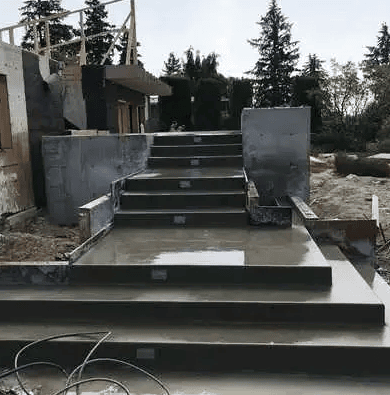
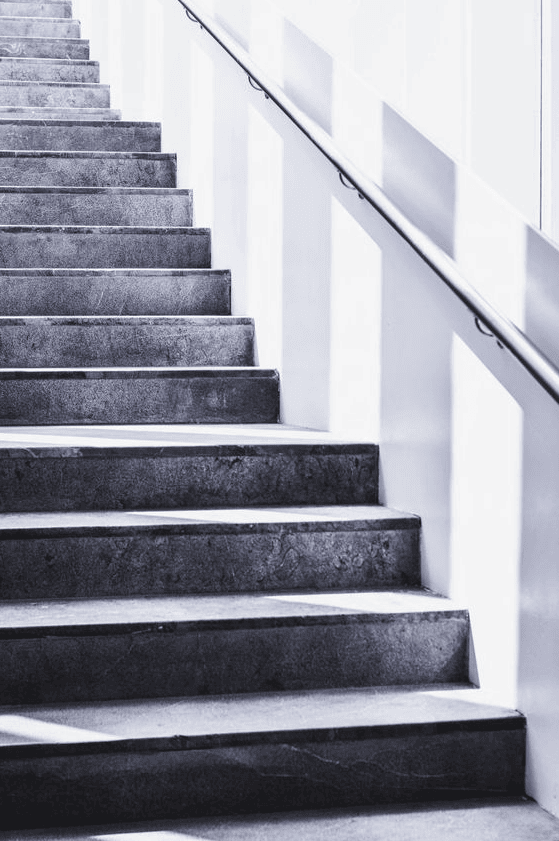
Concrete steps are a set of stair treads and risers built from poured concrete stairs that are formed, reinforced, and finished on-site or delivered as precast units. Each step typically follows standard dimensions to meet the Alabama Building Code and IRC 2021 guidelines, which call for a riser height around 7 inches and a tread depth of at least 11 inches. A properly built set of steps starts with a compactable gravel base and uses rebar or WWF welded wire fabric inside the concrete to hold everything together. The mix itself is usually poured at 3500 psi or higher, giving you a solid, long-lasting structure that holds up well through Birmingham's hot summers and wet winters.
Common Uses Around Residential and Commercial Properties
You will find outdoor concrete steps at front entryways, side doors, back patios, basement walkouts, and loading areas on commercial buildings. In neighborhoods like Homewood, Mountain Brook, and Vestavia Hills, front entry steps are often one of the first things people notice about a property. For businesses along corridors like US Highway 280 or near the UAB Campus, concrete stairs need to meet ADA Standards for Accessible Design and hold up under heavy daily foot traffic. Whether the project is a simple two-step stoop or a longer staircase connecting a deck to a yard, concrete handles the job well in nearly any setting.
How Concrete Steps Differ from Other Stair Materials Like Wood or Brick
Wood steps can rot, warp, and attract insects, especially in Alabama's humid climate. Brick steps can look sharp but may shift over time if the mortar breaks down or the base settles. Reinforced concrete steps resist those problems. With the right finish, such as a broom finish concrete surface for traction, and a penetrating silane sealer to protect against moisture, concrete steps require far less upkeep than wood or brick over the years. They also carry more weight, resist erosion better, and tend to stay stable even in areas with the kind of red clay soil and expansive clay common throughout the Birmingham area, which can shift and settle under lighter structures.
Knowing what concrete steps are made of and how they work is a good starting point. The next step is recognizing when your existing steps are telling you they need attention.
Signs You Need New or Repaired Concrete Steps
If you have concrete steps at your home or business in Birmingham, wear and damage can build up over time. Alabama's heat, humidity, and seasonal rain put real stress on outdoor concrete. Knowing what to look for can help you decide whether you need a repair or a full replacement before a small problem turns into a bigger one.
Cracking, Chipping, and Spalling on Existing Stairs
Surface damage is one of the most common signs that your concrete stairs need attention. Hairline cracks can let water in, and when that moisture expands and contracts with temperature changes, the damage spreads. Chipping and spalling, where the surface flakes or breaks away in chunks, can expose the interior of the concrete and weaken the overall structure. We see this often on older outdoor concrete steps around Birmingham, especially in areas like Vestavia Hills and Homewood where properties have mature landscaping and steps that have been in place for decades. If the surface has gotten rough, pitted, or uneven, that also raises the risk of slipping, particularly when steps are wet.
Uneven or Settled Steps That Create Trip Hazards
Birmingham sits on a mix of red clay soil and expansive clay that shifts with moisture changes. Over time, that movement can cause steps to settle unevenly. Even a small height difference between treads can create a real trip hazard. According to IRC 2021 and the Alabama Building Code, riser height should be consistent, and a standard safe riser is around 7 inches with at least an 11 inch tread depth. When steps no longer meet those measurements, they become uncomfortable and unsafe to use. We take concrete stair safety seriously, and uneven settling is one of the clearest signs that it's time to call us.
Erosion and Shifting Around the Base of the Steps
Soil erosion around the base of your steps is easy to overlook, but it matters. When the ground underneath or beside your steps washes away, the compactable gravel base that supports the concrete can shift or sink. This puts stress on the structure from below and can lead to cracking or full separation over time. We often find this issue around properties near Five Mile Creek and Village Creek corridors, where drainage patterns and soil plasticity index can vary quite a bit. Proper grading and drainage planning during installation help prevent this, but if it has already started, repairs or replacement may be needed to stabilize the area.
Steps That No Longer Meet Code or Accessibility Standards
Older steps were often built without today's requirements in mind. If you are renovating a property, adding a ramp, or preparing for a permit inspection through the Birmingham Department of Planning Engineering and Permits, your existing steps may not pass. ADA Standards for Accessible Design and IBC 2021 outline specific requirements for width, rise, run, landings, and handrails. Steps that fall short of these standards can lead to failed inspections or liability concerns, especially for commercial properties. We know the local code landscape well and can assess whether your current steps need to be brought up to standard.
Once you know what condition your existing steps are in, the next step is understanding what kind of concrete stairs we can build or replace them with.
A few years back, we got a call from a homeowner over in Hoover who needed new concrete steps leading up to their front door. Simple enough job on the surface, but once we showed up and started digging in, we ran into something we did not expect.
The existing steps had been poured directly over a patch of soft, unstable red clay soil. If you have lived in the Birmingham area for any length of time, you already know that our local soil can be tricky. That red clay expands when it gets wet and shrinks when it dries out. The old steps had cracked and shifted badly because of it, and whoever poured them originally never accounted for proper base preparation.
Before we could pour a single inch of new concrete, we had to remove all the old broken material and dig down further than originally planned. We brought in compacted gravel fill to build a stable base that could handle the movement of the soil beneath it. We also added steel rebar reinforcement throughout the entire structure to give the steps the strength they needed to hold up over time.
The whole project took about two days longer than we quoted, and we had a straightforward conversation with the homeowner about why. We adjusted our schedule and made sure the work was done right before we left.
That job is a good reminder of why base preparation matters just as much as the concrete itself. With over 20 years of combined experience pouring concrete, including more than 10 years working right here in Birmingham, we have learned to expect the unexpected and plan accordingly when we work on your property.
Types of Concrete Steps We Install
We work with homeowners and businesses across Birmingham on a wide range of concrete stair projects. Whether you need new steps built from scratch or want to replace something that has seen better days, the right approach depends on where the stairs go and how they will be used. Here is a look at the main types of outdoor concrete steps and stairs we install.
Front Entryway and Porch Steps
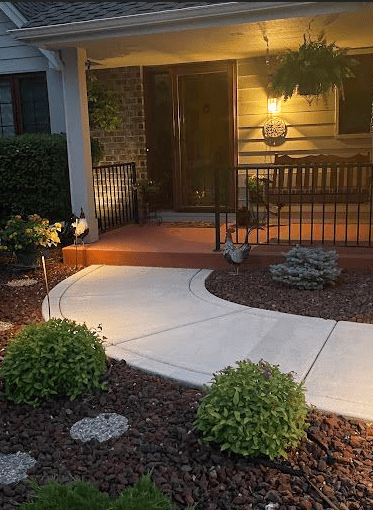
Front steps are one of the first things people notice about a home. We build front entryway and porch steps that hold up to daily use and Birmingham's mix of heat, humidity, and occasional hard rain. Using reinforced concrete steps with proper rebar placement and a solid compactable gravel base, we make sure these steps stay level and crack-free over time. We can pour them with a broom finish for traction or use stamped or integral color concrete if you want something that matches your home's exterior more closely.
Patio and Backyard Access Stairs
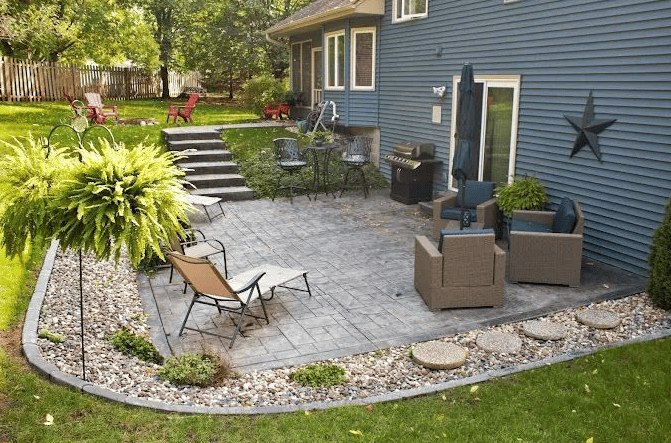
Steps connecting a patio or deck to your yard take a lot of wear. Soil movement is a real concern in Birmingham because of the red clay soil common throughout Jefferson County. That shifting ground can cause poorly built steps to crack or settle within just a few years. We account for that by digging down to stable soil, compacting the base, and using the right concrete mix and reinforcement so your patio stairs stay put. A non-slip concrete surface finish is something we recommend here since these steps are often exposed to morning dew and rainfall.
Basement and Walkout Stairs
Basement and walkout stairs need careful attention to drainage and structural support. Water that pools around or under these steps can cause serious damage over time. We grade the surrounding area during installation so water runs away from the structure, and we use concrete that meets or exceeds 3500 psi for strength. Proper riser height and tread depth, typically around a 7 inch rise and 11 inch tread, keep these stairs comfortable and code-compliant under the Alabama Building Code and IRC 2021 standards.
Commercial Building Entrance Steps
For businesses in areas like Homewood, Hoover, or along US Highway 280, we build commercial entrance steps that meet ADA Standards for Accessible Design and local Birmingham Building Code requirements. Commercial steps see much heavier foot traffic than residential ones, so we use higher-strength concrete and heavier reinforcement where needed. We also work with business owners to handle the permitting side through the Birmingham Department of Planning Engineering and Permits when required.
Retaining Wall and Grade Change Steps
Many properties in Birmingham sit on sloped or uneven ground, especially in neighborhoods like Mountain Brook, Vestavia Hills, and Cahaba Heights. Steps built into or alongside a retaining wall help manage those grade changes while giving people safe, easy access across different levels. This type of concrete stair design takes planning because the steps need to work with the wall structurally, not just sit next to it. We factor in soil bearing capacity, proper footing depth, and drainage from the start so the whole system performs well together.
No matter which type of steps fits your project, the installation process follows a careful sequence that makes a real difference in how long your stairs last and how safe they are to use.
Our Concrete Steps Installation Process
When we take on a concrete steps project in Birmingham, we follow a clear process from start to finish. Whether you're in Homewood, Vestavia Hills, or anywhere else in the metro area, each job gets the same careful attention. Here's what you can expect when we work on your property.
Site Evaluation and Grading Preparation
Before anything gets poured, we take a close look at the ground where your steps will sit. Birmingham's red clay soil and expansive clay can shift with moisture changes, which puts stress on concrete over time. We check the soil bearing capacity and make sure the base is solid. If grading is needed to direct water away from the steps, we handle that first. We also pull any required permits through the Birmingham Department of Planning Engineering and Permits and confirm the project aligns with the Alabama Building Code and ADA Standards for Accessible Design where applicable.
Building and Setting the Forms
Once the ground is prepped, we build the forms that shape your steps. We use a compactable gravel base, typically 4 to 6 inches deep, to give the concrete a stable platform. Rebar, usually #4 or #5 rebar at 12-inch spacing, gets placed inside the forms to reinforce the structure. The riser height, tread depth, and overall width are measured carefully. Standard dimensions we follow run around a 7-inch riser height and 11-inch tread depth, but we adjust based on your specific site and any code requirements that apply.
Pouring and Consolidating the Concrete
We source ready-mix concrete locally and typically use a mix in the 3500 to 4000 psi range for outdoor concrete steps. An internal pencil vibrator helps us consolidate the concrete inside the forms so air pockets don't form around the rebar. Proper consolidation is one of the most important steps in the process because voids inside the concrete can lead to cracking and spalling down the road. Alabama's heat and humidity influence how quickly concrete sets, so we account for conditions on pour day.
Finishing Techniques for Texture and Slip Resistance
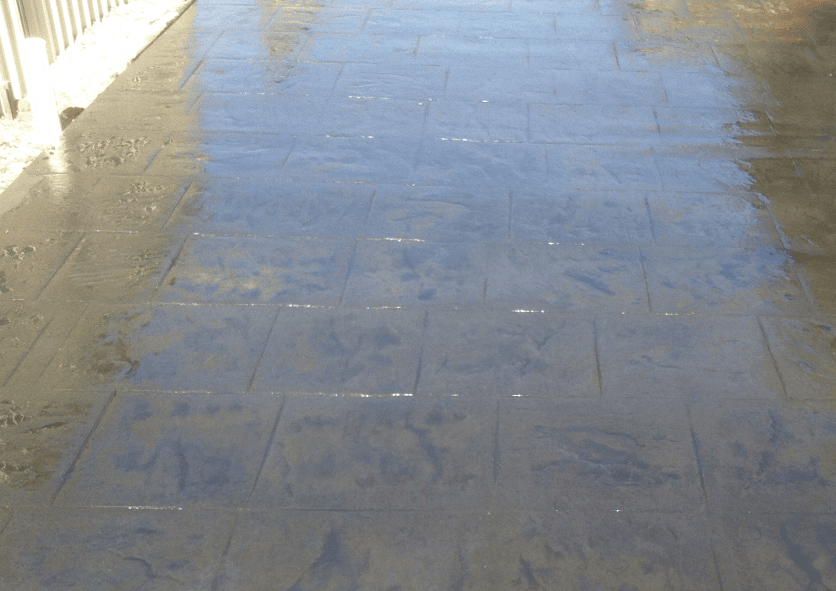
After the pour, we work the surface while the concrete is still workable. For outdoor concrete steps, a broom finish is one of the most practical choices because it creates a non-slip concrete surface that holds up well through rain and temperature changes. We use a magnesium float first to level and smooth the surface, then apply the broom finish across each tread. If you want something different visually, exposed aggregate and stamped concrete are also options we can discuss. We can also apply a penetrating silane sealer after curing to protect the surface from moisture and wear.
Curing Time and What to Expect After the Pour
Concrete needs time to gain strength after the pour. We apply a curing compound to slow moisture loss and help the concrete reach its full 28-day compressive strength. You'll want to stay off the steps for at least 24 to 48 hours, and avoid heavy loads for about a week. During that time, the surface may look different from day to day as it dries and cures. That's normal. Once the steps are fully cured, they're ready for regular use and require very little ongoing maintenance compared to wood or metal alternatives.
With the structural work done, many homeowners and property owners in Birmingham start thinking about how to make their steps fit the look and feel of the rest of the property. That's where customization options come in.
Customization Options for Concrete Steps
One of the real advantages of poured concrete stairs is how much flexibility you have when it comes to design. Whether you are updating the front entry of a home in Vestavia Hills or adding basement access to a property in Trussville, we can build steps that fit your space and your preferences. Here is a closer look at what you can choose from.
Size, Width, and Rise and Run Dimensions
Concrete steps are not one-size-fits-all. We work with you to figure out the right dimensions for your specific situation. A standard setup often uses a 7 inch riser height and an 11 inch tread depth, but those numbers can shift depending on your grade change and how the steps will be used. Width is just as important, especially for entryways that see a lot of foot traffic. We build steps that meet the Alabama Building Code and, where needed, the ADA Standards for Accessible Design. Getting the dimensions right from the start means safer, more comfortable steps for years to come.
Surface Finishes Including Broom, Exposed Aggregate, and Stamped Textures
The finish you choose affects both how your steps look and how safe they are underfoot. A broom finish concrete surface is the most common choice for outdoor steps because it adds texture that helps with traction in wet weather, which matters here in Birmingham where summer rain and humidity are a regular part of life. Exposed aggregate concrete gives a more decorative look while still providing a non-slip concrete surface. Stamped concrete stairs are also an option if you want a pattern that resembles stone, brick, or tile. Each finish has different maintenance needs, so we walk you through what to expect before we pour.
Color Options and Integral Pigments
Plain gray is not your only option. Integral color concrete lets us mix pigment directly into the concrete before it is poured, so the color goes all the way through rather than sitting on the surface. This means chips and wear are far less noticeable over time. Colors range from earth tones to deeper shades that complement brick, stone, or siding. If you have a property in a neighborhood like Mountain Brook or Homewood where exterior appearance matters, color can make a real difference in how the finished steps tie into the overall look of the home.
Matching Existing Concrete Flatwork or Structures on Your Property
If you already have a concrete driveway, patio, or walkway, we can work to match the new steps as closely as possible. That might mean matching an existing broom finish, using a similar aggregate size, or blending color pigments to get close to what is already there. A perfect match is not always possible since existing concrete weathers and changes over time, but we do our best to keep things looking consistent. This is especially useful when you are replacing damaged steps and want the new work to blend in rather than stand out.
With so many choices available, concrete ends up being a highly adaptable material for steps and stairs. That flexibility is worth keeping in mind as we look at how concrete compares to other common step materials.
No Guesswork, Just Solid Concrete Work
We are a concrete contractor based right here in Birmingham, AL. Our team has over 20 years of combined experience pouring concrete, and we have spent more than 10 years working specifically in the Birmingham area. That means we know the local soil conditions, the weather patterns that affect how concrete cures, and the building standards that apply to projects in this region.
Concrete work is not something you want to redo. When it is done right the first time, it holds up for decades. When it is not, you end up with cracks, settling, and repairs that cost more than the original job. We take the time to do things correctly from the start, whether we are working on a driveway, a patio, a foundation, or a commercial slab.
Over the years, we have worked on projects across Birmingham and the surrounding communities, including Hoover, Vestavia Hills, Homewood, and Trussville. We understand what works in this area and what does not. The red clay soil common throughout Jefferson County, for example, requires careful ground preparation before any concrete is poured. These are the kinds of details that come from real experience, not just reading a manual.
When you reach out to us, you are talking directly with the people who will show up and do the work. We keep things straightforward, give you honest assessments, and make sure you understand what the job involves before anything gets started.
Concrete Steps vs Other Materials
When you're choosing materials for new steps or stairs, concrete is worth comparing closely against other common options. We've worked on properties across Birmingham long enough to see how different materials hold up over time, and the differences are real.
Concrete vs Wood Stairs for Durability and Maintenance
Wood stairs might seem like a straightforward choice, especially for a porch or deck, but they come with ongoing costs. Wood can rot, warp, and split when exposed to moisture and heat. In Birmingham, where summers are humid and rain is common, wood steps often need repainting, sealing, or board replacement every few years. Termites are also a concern in this part of Alabama.
Poured concrete stairs don't rot, and they won't attract insects. Once properly installed and sealed with something like a penetrating silane sealer, they hold up with very little upkeep. You won't be climbing under your porch every spring to check for soft spots or loose boards.
Concrete vs Brick or Stone Steps for Cost and Longevity
Brick and natural stone steps can look great, but they tend to cost more in both materials and labor. Individual units can shift, crack, or become uneven over time, especially when the base isn't right. Birmingham's red clay soil expands and contracts with moisture, which puts stress on mortared masonry. When bricks or stones shift, the repair work can be just as expensive as the original installation.
Reinforced concrete steps, built with #4 rebar or #5 rebar and poured over a solid compactable gravel base, tend to move and settle less. The structure is one continuous unit rather than individual pieces held together by mortar. That matters a lot when the ground beneath you is shifting.
Concrete can also be finished in ways that mimic the look of stone or brick. Stamped concrete and exposed aggregate finishes give you design options without the added cost or long-term maintenance concerns of natural materials. If you have a home in Vestavia Hills, Mountain Brook, or Homewood where curb appeal matters, those finish options are worth knowing about.
Why Concrete Holds Up Well in Birmingham's Climate
Birmingham doesn't have extreme freeze-thaw cycles like northern cities, but it does deal with hot summers, heavy rainfall, and occasional ice. Those conditions still take a toll on outdoor steps. Concrete mixed to at least 3500 psi with the right water-cement ratio holds up better under those swings than most alternatives.
We also pay close attention to drainage when we build steps. Water that pools around or under a set of steps will cause erosion and settlement over time. Proper grading from the start helps protect the structure for years. A broom finish or non-slip concrete surface treatment adds traction when rain makes outdoor steps slippery, which is a real safety concern during Birmingham's wetter months.
All of this connects directly to how steps need to be built to keep people safe, which is something the Birmingham Building Code and broader safety standards address in specific ways.
Code Compliance and Safety Considerations
When we build concrete steps in Birmingham, following the right codes is not optional. The Birmingham Building Code, along with the IRC 2021 and IBC 2021, sets clear rules for how stairs need to be built. Getting this right from the start protects you, your family, and anyone else who uses the steps. It also helps you avoid failed inspections through the Birmingham Department of Planning Engineering and Permits.
Standard Riser Height and Tread Depth Requirements
One of the most common causes of stair-related falls is uneven steps. Consistent dimensions matter. For most residential projects, we follow a 7 inch riser height and 11 inch tread depth as standard starting points. These measurements come from IRC 2021 guidelines and are designed to make each step feel natural underfoot. Even a small variation from one step to the next can throw off your stride and increase the chance of a trip. We measure carefully and form each step to stay consistent from top to bottom.
Handrail and Guardrail Planning Around Concrete Stairs
Handrails are required on many stair configurations, and the rules depend on the number of steps and the height of the stairway. We plan for handrail placement during the forming stage so anchors and posts are set into the concrete properly. This is stronger and cleaner than trying to add them after the fact. For elevated landings or open sides, guardrails may also be required under the Alabama Building Code. We look at your specific setup and make sure the structural support is built in from the beginning.
ADA and Accessibility Considerations for Commercial Properties
If you own or manage a commercial property in Birmingham, the ADA Standards for Accessible Design apply to your steps and entryways. This often means ramps, level landings, specific slope limits, and surface texture requirements need to be part of the plan. We are familiar with these standards and have worked on properties near areas like the UAB Campus and throughout Hoover and Vestavia Hills where accessible design is a regular part of the scope. Getting this right up front saves you from costly corrections later.
Slip Resistance and Drainage Built Into the Design
Outdoor concrete steps need to shed water quickly. Birmingham gets a fair amount of rain, and standing water on steps creates a real slip hazard. We build a slight forward pitch into each tread so water runs off rather than pools. For the surface itself, a broom finish is one of the most reliable ways to add texture and improve grip without any extra materials. In some cases, we also use an air-entraining admixture in the mix to help the surface hold up better through seasonal temperature changes. A penetrating silane sealer applied after curing adds another layer of protection against moisture without making the surface slick.
All of these details feed directly into how long your steps last and how safe they are to use day to day. When the foundation is solid, the dimensions are right, and the surface is properly finished, you end up with steps that hold up well over time. But even well-built concrete can show wear after years of use, which is why knowing how to handle repairs and resurfacing is just as important as getting the installation right.
Concrete Step Repair and Resurfacing
Not every damaged staircase needs to be torn out and replaced. In many cases, we can repair and resurface your existing concrete steps and give them several more years of safe, solid use. After working in Birmingham for over a decade, we have seen all kinds of step damage, from surface cracks caused by Alabama's heat and humidity to deeper spalling from water getting in and freezing during our occasional cold snaps.
When Repair Is a Better Option Than Full Replacement
If your steps are structurally sound but showing surface wear, cracking, or minor settling, repair is usually the smarter choice. Full replacement means breaking out the old concrete, hauling it away, regrading the base, and starting fresh, which takes more time and costs more money. When the base and the bones of the steps are still in good shape, we can often restore what you have at a fraction of the cost. We will look at the condition of the subgrade, check for any movement or shifting, and let you know honestly whether repair makes sense or whether replacement is the safer long-term call.
Filling Cracks and Patching Spalled Surfaces
Surface cracks and spalling are common on older outdoor concrete steps, especially in areas like Vestavia Hills or Mountain Brook where tree roots, clay soil movement, and weather take a toll over time. We use a bonding agent before applying patching material to make sure the repair actually holds. For deeper cracks, epoxy injection can stabilize the area and keep water from getting further in. Birmingham's red clay soil can shift with moisture changes, so patching alone is only part of the fix. We also make sure the area around and under the steps is draining properly before we close anything up.
Resurfacing Worn or Stained Concrete Steps
If your steps are structurally fine but look worn out, stained, or uneven, resurfacing is a solid option. We apply a concrete overlay that bonds to the existing surface and gives you a clean, fresh look. You can choose from a basic broom finish for a non-slip concrete surface, or go with something like exposed aggregate or stamped concrete if you want something that ties in with the rest of your property. Resurfacing also lets us correct minor unevenness and improve the tread texture, which matters for concrete stair safety, especially on exterior steps that get wet.
Sealing Repaired Steps to Extend Their Lifespan
Once the repair or resurfacing is done, sealing the surface is one of the most important steps we take. A penetrating silane sealer works well on Birmingham-area steps because it keeps moisture out without changing the look of the concrete. Products like BASF MasterSeal or Euclid Chemical Everclear are options we use depending on the surface condition and exposure. Sealing slows down future cracking, reduces staining, and helps the concrete handle the repeated wet and dry cycles we see here in central Alabama. We typically recommend resealing every few years as part of basic concrete stair maintenance to keep everything in good shape.
If your steps are beyond what repair can reasonably fix, or if you are simply weighing your options, the next thing most people want to know is what this work is going to cost.
How Much Do Concrete Steps Cost in Birmingham, AL
If you are trying to budget for new concrete steps, the honest answer is that the cost depends on several things specific to your project. We have been working on concrete steps and stairs across Birmingham for over 10 years, and no two jobs are exactly alike. What we can do is walk you through what drives the price so you know what to expect before we ever show up to take a look.
Factors That Affect the Price of Concrete Steps
The size of the steps is the most obvious factor. A small set of two or three outdoor concrete steps leading to a front door costs less than a full staircase running from a porch down to a walkway or from an upper deck to a lower patio. Width matters too. A standard 36 inch wide step takes more material and labor than a narrow utility stair.
The condition of the ground underneath plays a big role as well. Birmingham sits on a mix of red clay soil and, in some areas, limestone bedrock. Both can create challenges when preparing a proper base. If the existing soil is soft or has poor bearing capacity, we may need to dig deeper, add more compactable gravel base, or adjust the footing depth to keep your steps from settling or cracking over time. That extra work adds to the overall price, but it is what makes the difference between steps that last and steps that fail.
The type of finish you choose also affects cost. A basic broom finish costs less than decorative concrete stairs with stamped concrete or exposed aggregate. If you want integral color or a special texture to match your existing concrete or landscaping, that adds material and labor as well. Things like rebar placement, concrete mix strength, and whether the job requires a permit through the Birmingham Department of Planning Engineering and Permits can all shift the final number.
Accessibility and site access matter too. If we can get a ready-mix truck close to the pour area, the job moves faster. If we are working in a tight backyard or on a hillside, we may need a concrete pump or a concrete buggy to move material, which adds time and cost.
Typical Cost Ranges for Residential vs. Commercial Projects
For a standard residential set of poured concrete stairs, most homeowners in areas like Homewood, Vestavia Hills, or Trussville are looking at somewhere between $1,000 and $4,000 depending on size, site conditions, and finish. Smaller entry steps on the lower end, larger or more detailed sets on the higher end.
Commercial projects, like those at a business entrance or a multi-unit property, tend to run higher. They often need to meet stricter requirements under the Alabama Building Code and ADA Standards for Accessible Design, which can mean wider treads, specific riser heights, landings, and handrail provisions. A commercial stair installation in Birmingham can range from $3,000 to well over $10,000 depending on scope. Projects requiring permits, inspections, or engineered drawings will also factor into total costs.
Repair and resurfacing work, such as patching cracked or spalled steps, generally costs less than full replacement but still requires proper prep, the right bonding agent, and a finish that holds up to foot traffic and Birmingham's heat and humidity.
How to Get an Accurate Quote from Us
The most straightforward way to get a solid number is to have us come take a look. We offer on-site estimates where we can measure the area, check the condition of any existing steps, look at the grade, and talk through what finish or design makes sense for your property. That conversation gives us what we need to put together a detailed quote rather than a rough ballpark.
A few things that help us prepare a more accurate estimate before we arrive: knowing roughly how many steps you need, whether you are replacing existing stairs or starting from scratch, and whether the project is for a home or a business. If you have any photos of the area, those are useful too. You can reach us by phone or through the contact form on this site to set up a time that works for you.
Once you have your quote in hand and you are ready to compare your options, we think it helps to understand a little more about who we are and how we work in Birmingham.
Why Choose Us for Concrete Steps in Birmingham
We know there are a lot of contractors to choose from in the Birmingham area, so we want to be straightforward about who we are and how we work. Our team has over 20 years of combined experience pouring concrete, and we have spent more than 10 years working specifically in Birmingham and the surrounding communities, from Hoover and Vestavia Hills to Trussville and Mountain Brook. That local experience matters more than people might think.
Over 20 Years of Concrete Experience and 10 Years Serving Birmingham
Birmingham's soil conditions, including the red clay soil and expansive clay common throughout Jefferson County, can shift and settle in ways that put real stress on concrete steps over time. We have learned how to account for that. We prep the base carefully, use proper compactable gravel base material, and reinforce our steps with rebar sized and spaced for the load they need to carry. Our concrete mixes typically meet or exceed 3500 psi strength, and we follow ACI 318 standards along with the Alabama Building Code and Birmingham Building Code to make sure your steps are built right the first time.
Our Commitment to Quality Forming, Pouring, and Finishing
Getting concrete steps right takes attention at every stage. We take care with our forming to hold consistent riser height and tread depth, which keeps steps comfortable and code-compliant under IRC 2021 guidelines. During the pour, we use an internal pencil vibrator to work out air pockets and get a solid, uniform result. For finishing, we apply a broom finish to give outdoor concrete steps a reliable non-slip concrete surface, especially important given Birmingham's rainy seasons. Where clients want something different, we also work with stamped concrete and exposed aggregate concrete to improve the look of an entryway or porch.
How We Handle Projects From Start to Finish With No Subcontracting
When you hire us, you get our crew on your job, from the first site visit through forming, pouring, finishing, and cleanup. We do not hand your project off to a subcontractor. That means the same people who talked with you about the design are the ones doing the work. We pull permits through the Birmingham Department of Planning Engineering and Permits when required, and we make sure the finished steps meet ADA Standards for Accessible Design when that applies to your property.
We take the same approach whether we are working on a small residential entryway in Irondale or a larger commercial project near the UAB Campus. Consistent process, honest communication, and work we are willing to stand behind. That is what you can expect from us, and it is the same standard we carry into every project we take on.
Ready to Get Started on Your Concrete Steps in Birmingham?
Concrete Steps Are a Smart Investment for Your Property
When you add well-built concrete steps to your home or business, you are doing more than just filling a gap between levels. You are improving safety, boosting curb appeal, and adding something that will hold up for years with very little upkeep. Whether you are in Homewood, Vestavia Hills, Trussville, or anywhere else across the Birmingham area, solid outdoor concrete steps make a real difference in how your property looks and functions.
Here is a quick look at what you get when you choose professionally installed concrete steps:
- Stable, slip-resistant access that reduces trip-and-fall risks
- Reinforced concrete steps that resist cracking, settling, and weather damage
- A finished look that matches your existing concrete and improves curb appeal
- Low maintenance compared to wood or metal alternatives that rot, warp, or rust
- Steps built to meet the Alabama Building Code and Birmingham Building Code requirements
- Proper drainage design to protect against erosion and moisture buildup
- Consistent riser heights and tread depths for comfortable, safe everyday use
- Concrete that is mixed and poured to handle Birmingham's heat, humidity, and rain
- Increased property value for both residential and commercial properties
How to Reach Us and Get Started on Your Project in Birmingham
With over 20 years of combined experience pouring concrete and more than 10 years working right here in Birmingham, we know what it takes to build steps that last. We understand the local soil conditions, the permit process through the Birmingham Department of Planning Engineering and Permits, and the workmanship that holds up in Alabama weather. From the base prep and rebar placement to the pour, finish, and sealing, we handle every step of the process for you.
If you are ready to replace damaged steps, build a new entryway, or upgrade access to your porch, patio, or basement, we would like to hear from you. Fill out the quote form below or give us a call to get a free, no-pressure estimate on your concrete steps project in Birmingham.
Birmingham AL Concrete
3301 Lorna Rd
Birmingham, AL 35216
Business Hours
| Mon | 8:00 AM – 7:00 PM |
| Tue | 8:00 AM – 7:00 PM |
| Wed | 8:00 AM – 7:00 PM |
| Thu | 8:00 AM – 7:00 PM |
| Fri | 8:00 AM – 7:00 PM |
| Sat | 9:00 AM – 6:00 PM |